Practice scales for melodic solos

Practice Scales Like This…It’ll Transform Your Playing

How we practice dictates how we play. If we spend countless hours training our fingers to move straight up and down scale patterns, we can’t expect them to do something different when the music starts. So, we need to change how we practice scales so that it’s more in line with how we want to use them when improvising or playing a guitar solo.

Triads to solos thumbnail image

How to Turn Triads Into Melodic Guitar Solos

Grab the free lesson pack for this lesson (includes intro solo tab). Lesson Transcript: In this lesson, I’m going to show you step by step how to turn simple triads into melodic guitar solos. One of the hardest things about learning guitar is taking things you know and actually using them musically. So with this […]

CAGED minor scales thumbnail
CAGED minor pentatonics
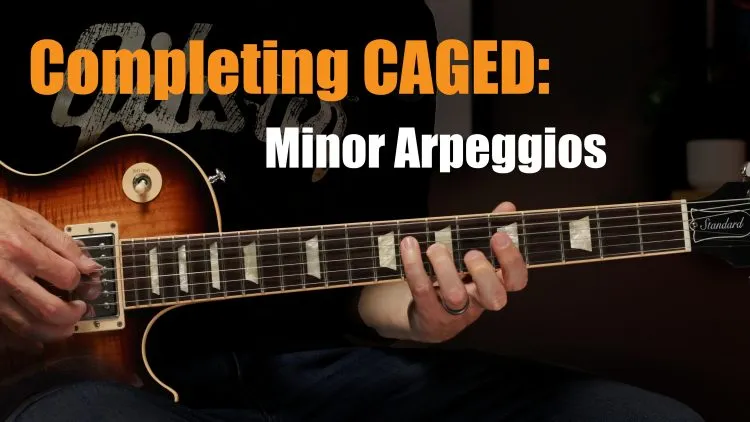
Minor caged arpeggios on guitar
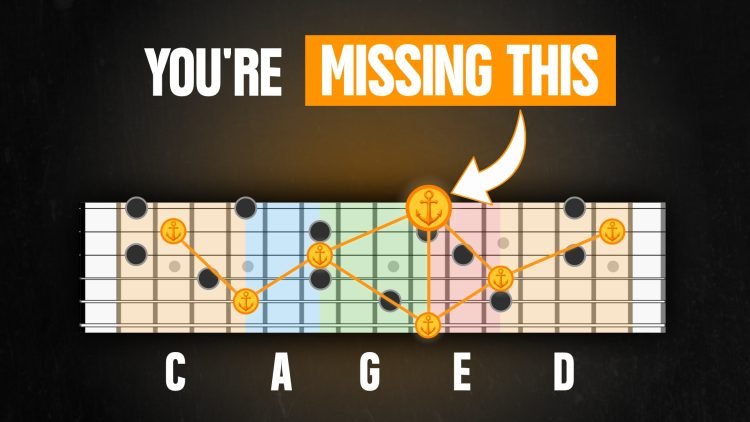
Navigating with CAGED diagram

Navigating with CAGED is Hard…Until You Do This

So, you know your CAGED chords, arpeggios, and scale shapes, but when it comes to moving around the fretboard, you still feel lost. If this sounds familiar, there’s really just one small piece you’re missing that’s keeping you from seeing everything up and down the neck.

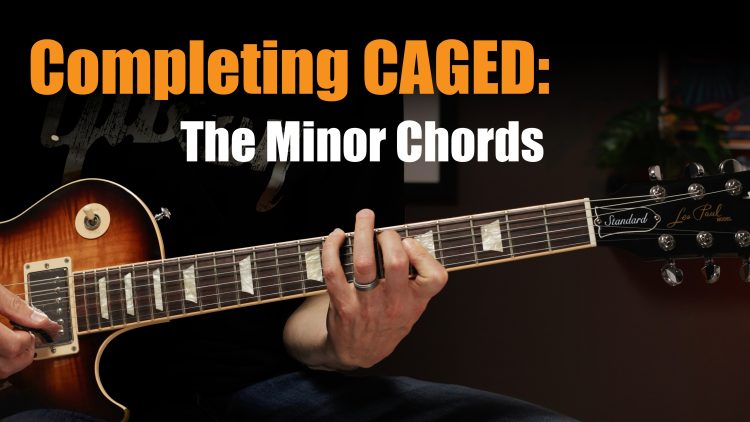
Minor CAGED system chords
Guy working through a guitar exercise

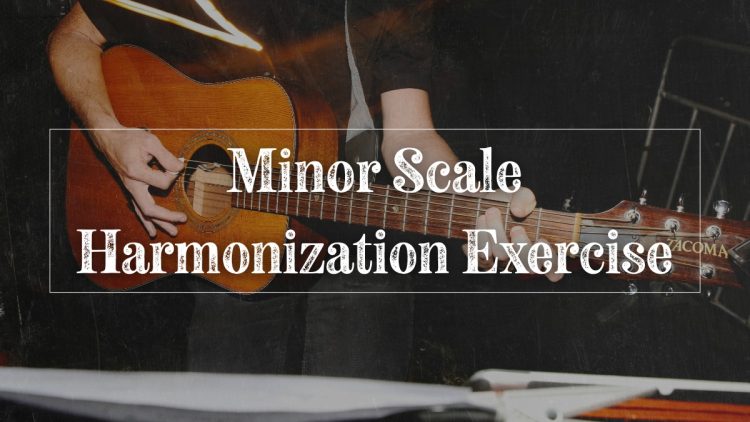
Minor Scale Positional Harmonization Exercise

In the last lesson, we harmonized the G major scale in first position to understand the chords and intervals contained within the scale. This type of exercise is great because it reinforces four essential skills at once: scale position identity, interval recognition, root note awareness, and diatonic harmony. In this lesson, we’re going to do the same with the G minor scale.

Guy playing guitar and making notes

Major Scale Positional Harmonization Exercise

I always enjoy exercises that are more encompassing than just learning a single skill. In this lesson, we’re going to harmonize the G major scale in first position to understand the chords and intervals of the key as a single system. This reinforces four essential skills at once: scale position identity, interval recognition, root note awareness, and diatonic harmony.

Guy playing arpeggios on guitar

Minor 7 Flat 5 Arpeggios

The minor 7 flat 5 arpeggio is one of those sounds that instantly adds tension to your playing—especially in blues and minor-key progressions. In this lesson, we’ll take a look at the five movable minor 7♭5 arpeggio shapes across the fretboard, complete with tabs, interval diagrams, and suggested fingerings to help you visualize how each shape is built.